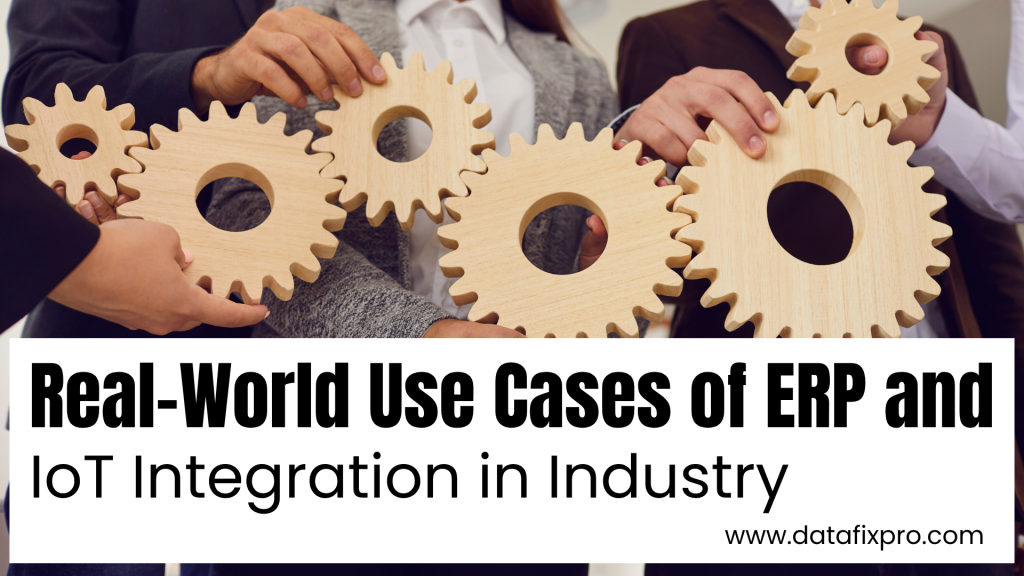

ERP and IoT integration is helping industrial businesses connect operational data with business processes. Instead of keeping machine data, inventory information, production records, and financial data in separate systems, companies can connect them to create a more complete view of daily operations.
IoT devices collect real-time data from machines, equipment, warehouses, and other assets. ERP systems can then use this information to support planning, purchasing, inventory management, production, and reporting.
Here are some practical examples of how this integration works in industry.
1. Real-Time Production Monitoring
Manufacturers can install IoT sensors on production equipment to monitor machine status, production output, operating conditions, and downtime.
When connected to an ERP system, this data can provide production teams with better visibility into actual operations.
For example, if a machine stops unexpectedly, the system can record the downtime and make the information available to production and management teams.
This helps businesses compare planned production with actual performance and identify recurring operational issues.
2. Predictive Maintenance
One of the most common industrial applications is predictive maintenance.
IoT sensors can continuously monitor factors such as temperature, vibration, pressure, and operating hours. When unusual patterns appear, maintenance teams can investigate the equipment before a major failure occurs.
ERP integration adds another layer by connecting equipment data with maintenance schedules, spare-part inventory, purchasing, and work orders.
For more detail, see our article on The Role of IoT in Predictive Maintenance and Cost Reduction.
3. Smarter Inventory Management
Inventory accuracy is critical for manufacturers and distributors. IoT devices can provide real-time information about stock movement, storage conditions, and warehouse activity.
When this data is connected to ERP, businesses can improve visibility across inventory processes.
| IoT Data | ERP Process | Business Benefit |
|---|---|---|
| Stock movement | Inventory management | Better stock visibility |
| Machine status | Maintenance | Faster response |
| Production output | Production planning | More accurate planning |
| Warehouse activity | Supply chain | Improved efficiency |
| Equipment conditions | Asset management | Reduced unexpected downtime |
This connection can also help teams identify when materials need to be replenished or moved between locations.
4. Supply Chain Visibility
IoT can provide valuable information beyond the factory floor.
Sensors and connected devices can track shipments, vehicles, storage conditions, and inventory movement. When this information flows into an ERP system, supply chain teams can see more of what is happening between suppliers, warehouses, production facilities, and customers.
For example, temperature sensors can monitor sensitive goods during transportation. If the temperature moves outside an acceptable range, the business can investigate the issue and take action.
You can also read IoT in Supply Chain Management: Improving Visibility and Accuracy for a deeper look at this use case.
5. Automated Production Data Collection
Many businesses still rely on manual data entry for production reports.
IoT can reduce this dependency by collecting information directly from connected machines and equipment. Production quantities, machine operating hours, and downtime can be captured automatically.
With ERP integration, this information can support production planning, reporting, costing, and performance analysis.
The result is a more connected flow of information from the production floor to business management.
6. Energy and Resource Monitoring
IoT sensors can also help companies monitor electricity, water, fuel, compressed air, and other resources.
For example, sensors can identify unusual energy consumption from a production line. When combined with ERP data, managers can compare resource usage with production volumes and operating costs.
This creates better visibility into where resources are being consumed and where operational improvements may be possible.
Making ERP and IoT Integration Work
Successful integration is not simply about connecting as many devices as possible.
Businesses should start with a specific operational problem and identify which data is actually useful. The next step is connecting IoT data with the ERP processes that can act on that information.
A practical approach includes:
- Identify a clear business or operational problem.
- Select the relevant equipment and IoT sensors.
- Connect IoT data with ERP processes.
- Define useful dashboards and alerts.
- Measure the operational impact.
- Expand the integration to other processes when appropriate.
This approach helps businesses avoid collecting large amounts of data without a clear purpose.
Conclusion
The real value of ERP and IoT integration comes from connecting operational data with business decisions. From predictive maintenance and production monitoring to inventory and supply chain visibility, the technology can help industrial companies build more connected operations.
As more equipment becomes connected, integrating IoT with ERP can become an important part of improving operational visibility and efficiency.
Build a More Connected Business
Datafixpro helps businesses connect ERP, SAP, IoT, and digital solutions to improve operational visibility and streamline business processes.