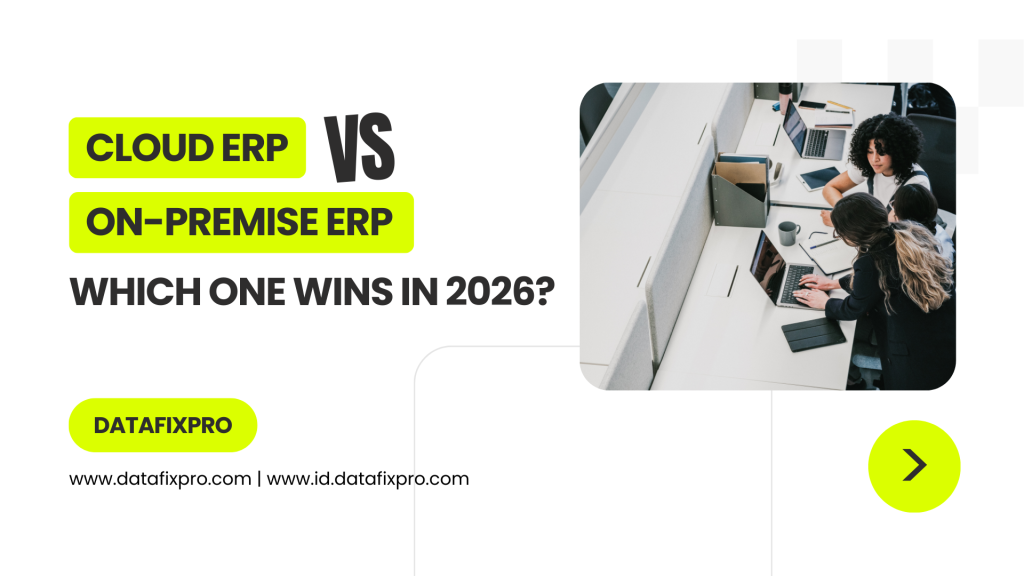

Cloud ERP vs On-Premise ERP has become one of the most critical technology debates for businesses entering 2026. As digital transformation accelerates, companies must decide whether cloud-based ERP systems or traditional on-premise solutions provide better scalability, security, and long-term value. Understanding the strengths and limitations of each model is essential to making the right strategic decision.
As businesses accelerate digital transformation, choosing the right Enterprise Resource Planning (ERP) system has become a critical strategic decision. In 2026, the debate between Cloud ERP vs On-Premise ERP is more relevant than ever, driven by rapid technological advancements, remote work adoption, and increasing demands for scalability and security.
So, which ERP model truly wins in 2026? Let’s explore the differences, advantages, challenges, and future outlook of both systems to help businesses make an informed decision.
What Is Cloud ERP?
Cloud ERP is an ERP system hosted on cloud infrastructure and accessed via the internet. Instead of installing software on local servers, companies subscribe to ERP services provided by vendors.
Key Characteristics of Cloud ERP
- Web-based access from anywhere
- Subscription-based pricing (monthly or yearly)
- Automatic updates and maintenance
- Scalable resources based on business needs
What Is On-Premise ERP?
On-Premise ERP is installed and operated on a company’s own servers and hardware. The organization is fully responsible for system management, security, and updates.
Key Characteristics of On-Premise ERP
- Installed on local infrastructure
- High upfront investment
- Full control over system and data
- Requires in-house IT team
Cloud ERP vs On-Premise ERP: Key Differences
1. Cost Structure
- Cloud ERP: Lower upfront costs with predictable subscription fees.
- On-Premise ERP: High initial investment for hardware, licenses, and infrastructure.
Winner in 2026: Cloud ERP
Businesses prioritize cost efficiency and reduced capital expenditure.
2. Scalability and Flexibility
- Cloud ERP: Easily scales up or down as business needs change.
- On-Premise ERP: Scaling requires new hardware and longer deployment times.
Winner in 2026: Cloud ERP
Agility is essential in a fast-changing market.
3. Implementation Speed
- Cloud ERP: Faster implementation, often within weeks or months.
- On-Premise ERP: Longer setup and customization cycles.
Winner in 2026: Cloud ERP
Time-to-value is a critical success factor.
4. Security and Compliance
- Cloud ERP: Vendors invest heavily in advanced cybersecurity, encryption, and compliance standards.
- On-Premise ERP: Security depends entirely on internal IT capabilities.
Winner in 2026: Cloud ERP
Cloud providers now often exceed enterprise-level security standards.
5. Accessibility and Remote Work
- Cloud ERP: Accessible anytime, anywhere, supporting hybrid and remote work.
- On-Premise ERP: Limited access unless configured with additional remote infrastructure.
Winner in 2026: Cloud ERP
Remote accessibility is no longer optional.
6. Customization and Control
- Cloud ERP: Limited deep customization but improving with modular designs.
- On-Premise ERP: High customization and full system control.
Winner in 2026: On-Premise ERP (for specific industries)
Industries with strict regulatory or operational needs may still prefer on-premise solutions.
Which ERP Model Is Better for Businesses in 2026?
For most organizations in 2026, Cloud ERP emerges as the clear winner due to its flexibility, lower costs, scalability, and support for modern work environments.
However, On-Premise ERP still holds value for:
- Large enterprises with complex legacy systems
- Organizations with strict data sovereignty requirements
- Industries requiring deep system customization
Future ERP Trends in 2026
- AI-powered analytics and automation
- Real-time data visibility
- Integration with IoT and advanced BI tools
- Increased adoption of hybrid ERP models
These trends further strengthen the dominance of Cloud ERP solutions.
Read More: ERP Software Trends in 2026: What Businesses Must Prepare For
In the battle of Cloud ERP vs On-Premise ERP, Cloud ERP clearly wins in 2026 for most businesses. Its scalability, cost-efficiency, security, and adaptability align perfectly with modern business needs.
That said, the “best” ERP solution always depends on your organization’s size, industry, and long-term strategy. Choosing wisely today will define operational success in the years ahead.
Transform your operations with the right ERP strategy. Contact us now to design, implement, and optimize your ERP system for long-term growth.

Pingback: How ERP Improves Efficiency Across All Departments - datafixpro